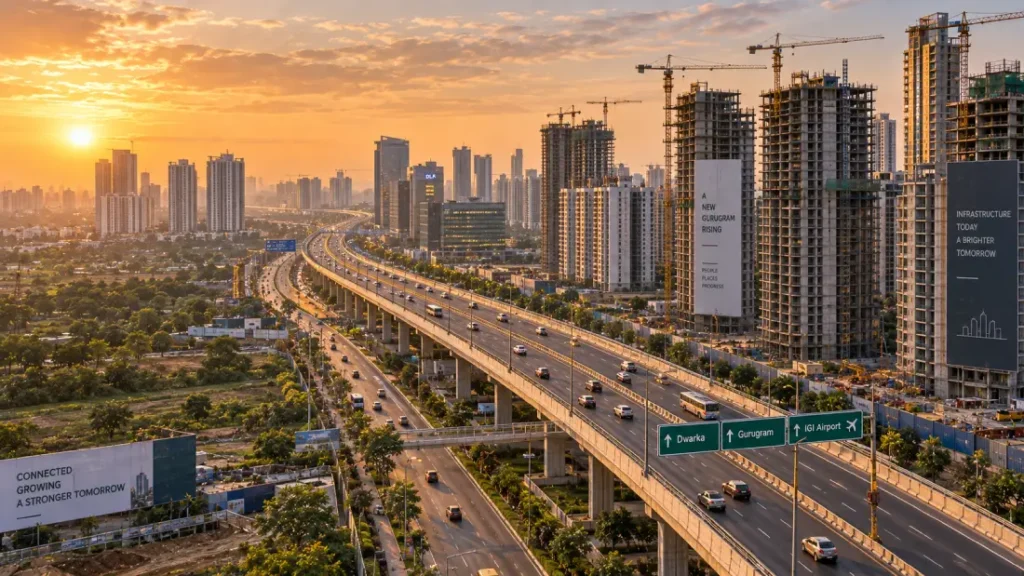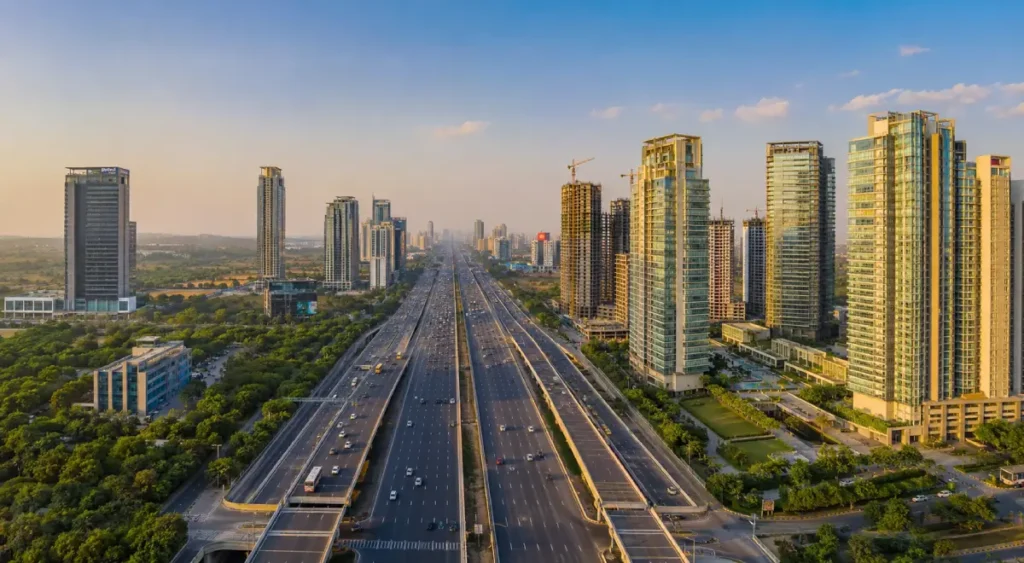
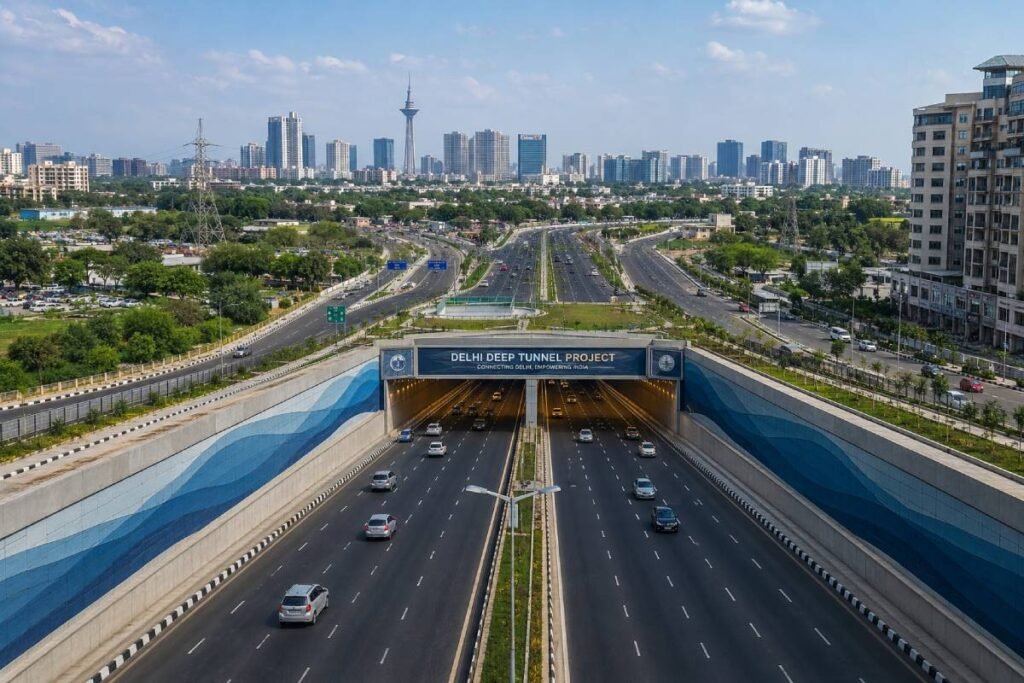
The Dwarka Expressway Vasant Kunj tunnel is finally moving from proposal to reality. On July 1, 2026, the Union Government approved the construction of this 6-lane road tunnel, which will directly connect the Dwarka Expressway with Nelson Mandela Marg in Vasant Kunj — a move expected to significantly ease the daily commute between West and South Delhi.
Delhi-NCR’s road infrastructure is about to take another big leap forward, and this project sits at the center of it.
Dwarka Expressway Vasant Kunj Tunnel: What Exactly Got Approved
The approved project involves an 8.1 km tunnel built under NH-148AE, linking the Dwarka Expressway (also referred to as Urban Extension Road 2) with Nelson Mandela Marg in Vasant Kunj. The total capital cost of the project has been pegged at over ₹6,969 crore, making it one of the more significant urban infrastructure investments announced for Delhi this year.
Union Information and Broadcasting Minister Ashwini Vaishnaw, who briefed the media on the Cabinet’s decision, said the project is designed to provide much faster connectivity between West Delhi and South Delhi — two zones that currently rely on congested surface roads and choked intersections to reach each other.
For anyone tracking infrastructure news along this corridor, the Dwarka Expressway Vasant Kunj tunnel represents one of the most consequential approvals of 2026 — not just for its cost, but for how directly it targets a long-standing commuter pain point.
Why the Dwarka Expressway Vasant Kunj Tunnel Matters for Commuters
Anyone who has driven between Gurugram and South Delhi knows the pain points well: the Mahipalpur stretch, the airport junction, and the general bottleneck around Vasant Kunj. This tunnel is aimed squarely at solving that problem by giving commuters a direct underground route that bypasses these congestion-heavy junctions entirely.
Right now, a trip from the Dwarka Expressway into South Delhi often means crawling through signal-heavy stretches near the airport before even reaching Vasant Kunj. Once operational, the tunnel is expected to cut this travel time meaningfully, since vehicles will bypass surface-level traffic altogether and emerge directly onto Nelson Mandela Marg.
In addition to the tunnel itself, the plan includes:
- A 1.8 km elevated road along Nelson Mandela Marg, specifically designed to reduce congestion at that intersection.
- A proposed elevated corridor between AIIMS and Mahipalpur, which NHAI is separately evaluating to further decongest one of Delhi’s busiest medical and transit hubs.
Together, these interventions suggest the government is thinking beyond a single road fix and is instead trying to redesign how traffic flows across this entire West-South Delhi corridor.
The Employment Angle
Beyond commute times, the project carries a meaningful economic footprint. According to the government’s own estimates, the tunnel and associated works are expected to generate close to 7.54 lakh person-days of direct employment and 9.80 lakh person-days of indirect employment — a sizable boost for the construction and allied sectors in the region. Large tunneling projects of this scale typically require specialized labor across engineering, safety, and civil works, so the ripple effect on local employment is likely to extend well beyond the immediate construction site.
How This Fits Into Delhi-NCR’s Bigger Infrastructure Push
The Dwarka Expressway Vasant Kunj tunnel approval comes at a time when the Dwarka Expressway corridor is already being reimagined as more than just a Gurugram-Delhi link. With separate discussions underway about extending the expressway further into central Delhi via Mayapuri Ring Road, and continued real estate momentum along the corridor, this tunnel adds another piece to what’s shaping up to be one of NCR’s most ambitious connectivity overhauls.
For residents, commuters, and businesses along this stretch, the key question now is timelines — and how soon construction breaks ground on a project of this scale. If executed on schedule, the Dwarka Expressway Vasant Kunj tunnel could become one of the most impactful last-mile connectivity fixes Delhi has seen in recent years, easing pressure on some of the capital’s most congested junctions.